Trading
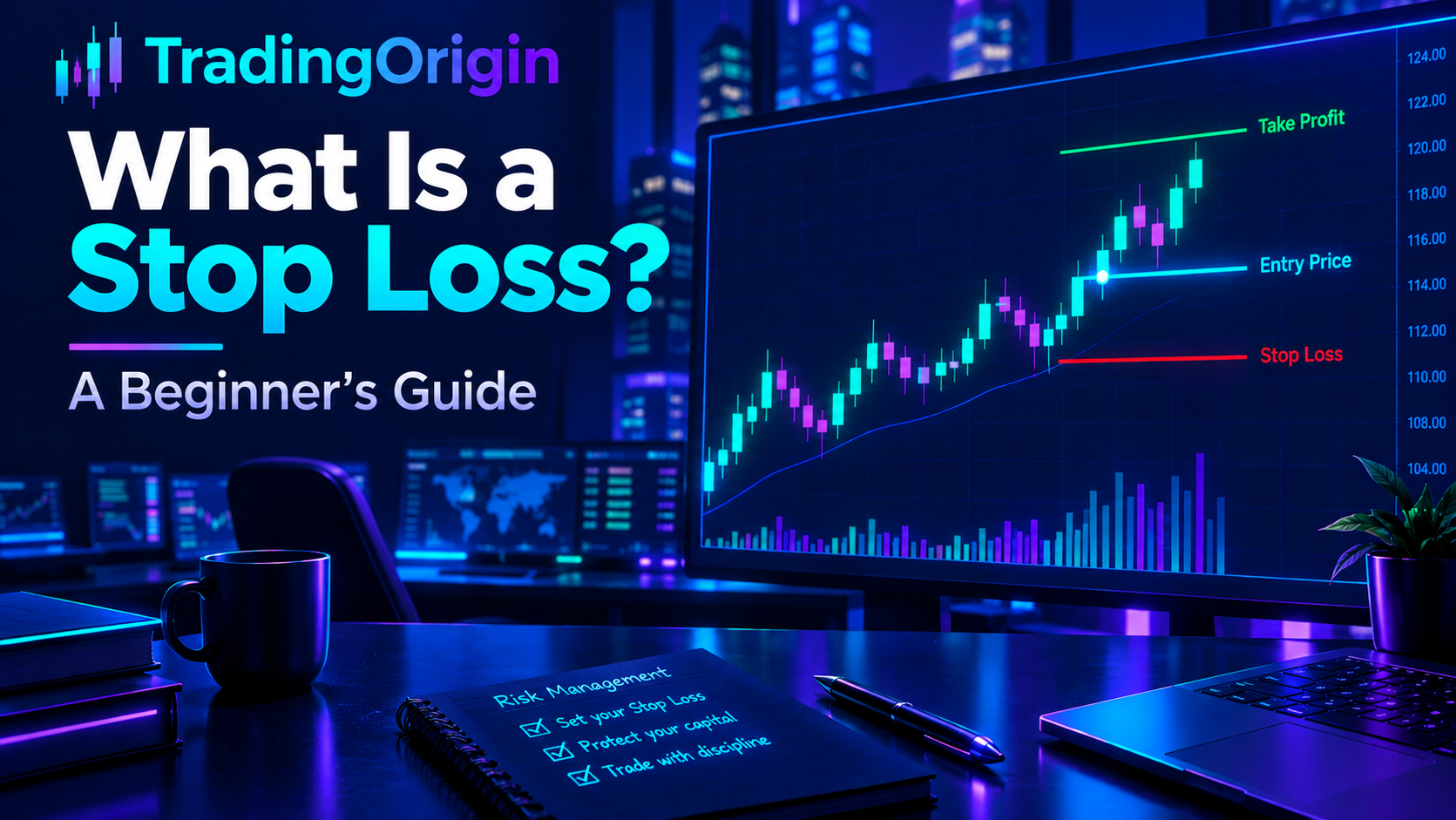
What Is a Stop Loss?A stop loss is an order that closes a trade automatically when the price reaches a level you chose in advance. Its purpose is to limit how much you can lose on a single trade if the market moves against you.
For example, if you buy an asset at 100 and set a stop loss at 95, your trade will be closed if the price falls to 95. Instead of watching a loss grow, you have decided the maximum loss before entering the trade.
A stop loss does not predict where the market will go. It is a risk-management tool, and it works the same way in crypto, forex, and other markets.
How Does a Stop Loss Work?When you open a trade, you choose an entry price and a stop-loss price.
If you are buying (a long trade), the stop loss is placed below your entry price.If you are selling (a short trade), the stop loss is placed above your entry price.
When the market reaches the stop-loss price, the order is triggered and your position is closed. Depending on the exchange or broker, the order may close at the exact price or at the next available price.
Why Is a Stop Loss Important?Most beginners focus on how much they can win. Experienced traders first ask how much they can lose.
A stop loss helps you:Define your risk before the trade starts.Avoid holding a losing trade because of hope or emotion.Protect your trading capital from one large loss.Trade with a clear plan instead of reacting to every price move.
Where Should You Place a Stop Loss?There is no single correct level, but traders commonly use these approaches.
Below support or above resistanceMany traders place a stop loss beyond a key price level. If price breaks through that level, the original idea may no longer be valid. You can learn how to find these areas in our article:What Are Support and Resistance? A Beginner's Guide
Based on market structureIn an uptrend, a trader might place the stop loss below a recent swing low. In a downtrend, above a recent swing high. To understand trends better, read:What Is Market Trend? How to Identify Bullish, Bearish & Sideways Markets
Based on volatilitySome traders measure how much the price normally moves and place the stop loss far enough away to avoid being triggered by normal fluctuations. Crypto markets can move quickly, so very tight stops are often hit by ordinary noise.
Based on a fixed percentageSome traders risk a fixed small percentage of their account on each trade and size the position so the stop loss matches that amount.
Stop Loss and Position SizeThe distance of your stop loss affects how large your position should be.
For example, if you decide to risk a small fixed amount on a trade and your stop loss is far from your entry, you need a smaller position. If your stop loss is close, you can use a larger position for the same risk.
This is why a stop loss and position sizing should always be planned together.
Common Stop Loss MistakesPlacing the stop loss too closeA very tight stop can be triggered by normal price movement, even when your overall idea was correct.
Moving the stop loss further awayWidening your stop loss after the trade moves against you defeats its purpose and can turn a small loss into a large one.
Trading without a stop lossEntering a trade without knowing where you will exit leaves your risk undefined.
Choosing the level randomlyA stop loss should be based on a reason, such as a price level, market structure, or volatility, not on a number that simply feels comfortable.
Ignoring leverageWhen you use leverage, a small price move can have a large effect on your account. A stop loss does not remove this risk, and in fast markets the price can move past your level before the order is filled.
Does a Stop Loss Guarantee Protection?No. A stop loss is useful, but it has limits. During fast moves, news events, or low liquidity, your order may be filled at a worse price than you set. This is called slippage. Some markets can also gap over your stop-loss level.
A stop loss reduces risk, but it does not eliminate it.
How a Stop Loss Fits Into a Trading PlanA stop loss is one part of a complete plan. A good plan also defines when to enter, where to take profit, and how much to risk. If you want to build a structured approach, read:What Is a Trading Strategy? A Beginner's Guide
If you are new to charts and indicators, start with:What Is Technical Analysis? A Beginner's Guide to Reading Charts
Final ThoughtsA stop loss is one of the simplest and most important tools in trading. It lets you decide your maximum loss before you enter a trade and helps you avoid emotional decisions.
Choose your stop-loss level for a clear reason, size your position to match it, and never rely on it as a guarantee. If you are just starting out, begin with our guide to the basics:What Is Trading? A Complete Beginner's Guide
Trading carries a high level of risk, and you can lose some or all of your capital. This article is for educational purposes only and is not financial advice.
Keep Learning: More Forex Articles
- How Economic News Affects Forex Signals: Interest Rates, CPI and NFP
- How to Use ATR for Forex Signals, Stop Loss and Volatility Analysis
- Best Candlestick Patterns for Forex Signals: Engulfing, Pin Bar and Reversal Setups
Want structured, step-by-step lessons? Explore the TradingOrigin Academy.
📢 Get our signals on Telegram
Follow our Telegram channel for crypto and forex signals, shared as they happen: 📲 Join TradingOrigin on Telegram
Want full access? View our crypto and forex signal plans.